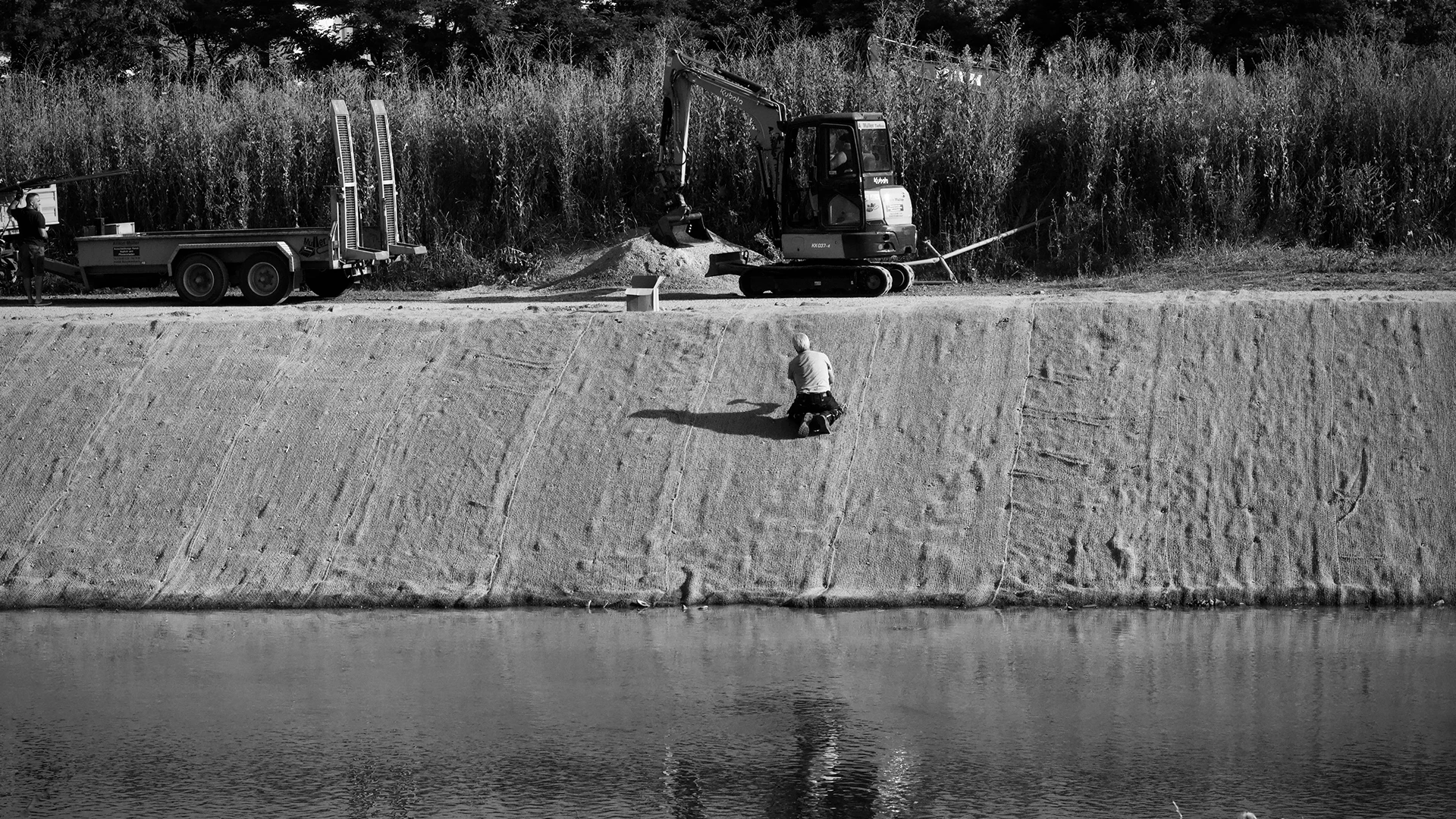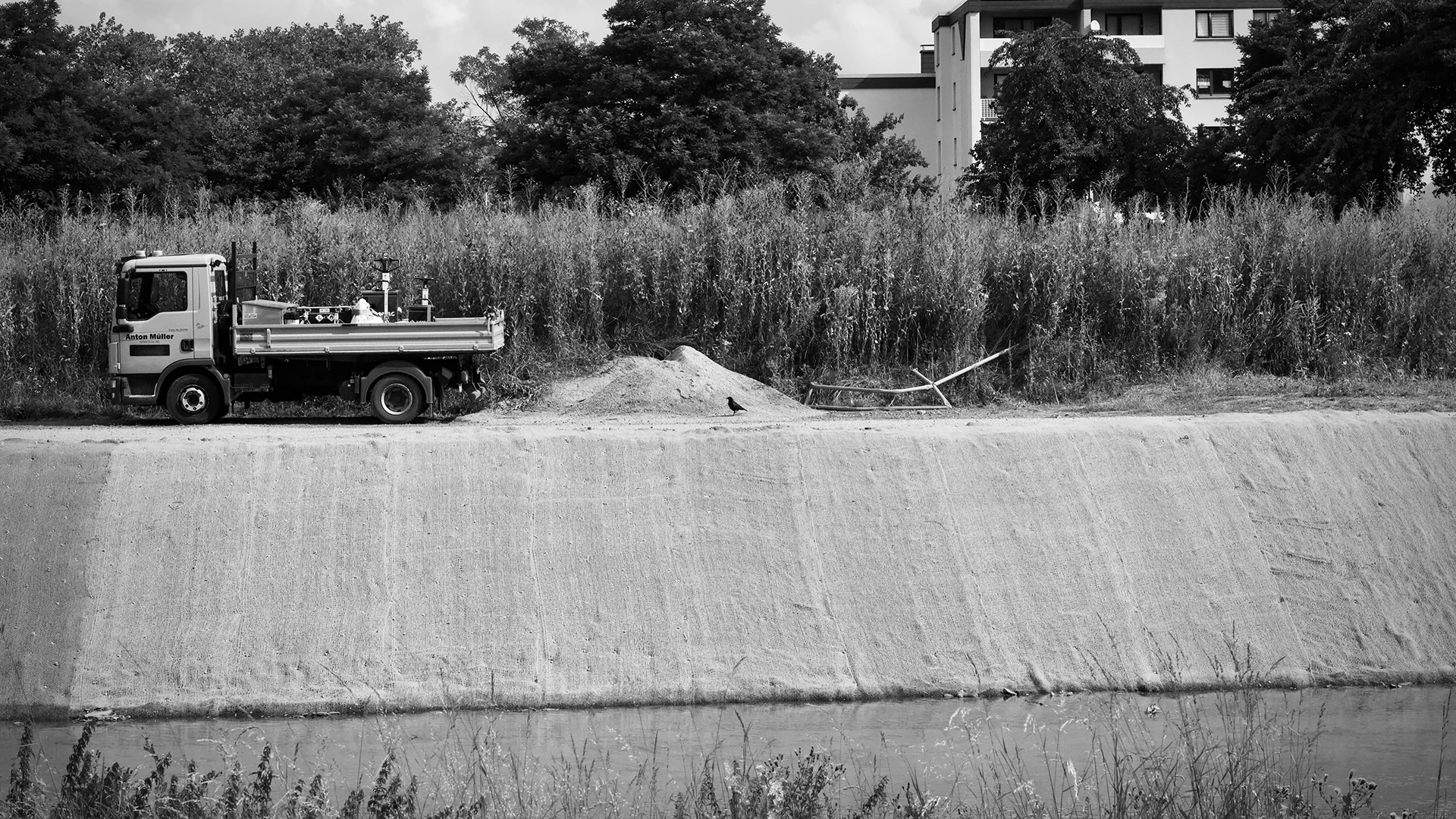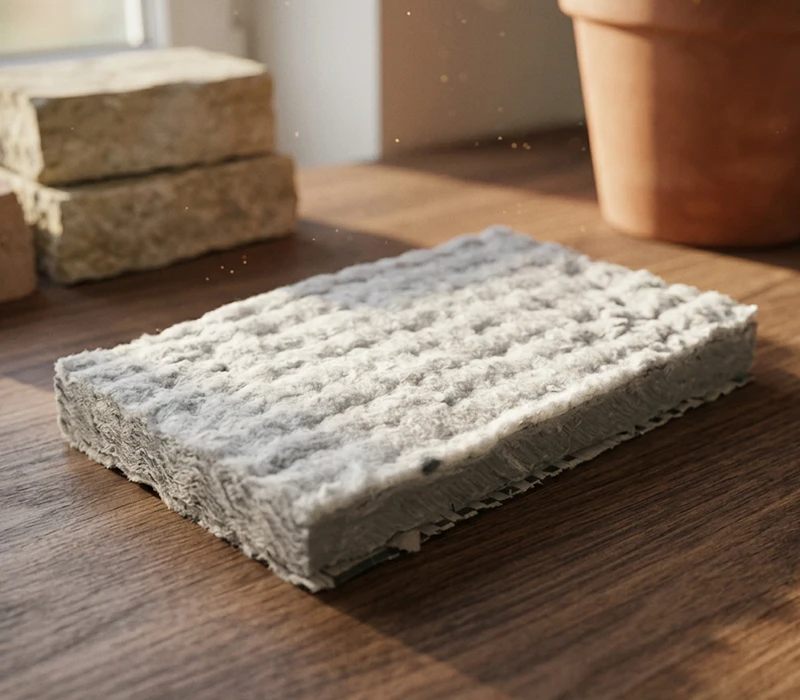
Concrete Mat is a geotextile-based composite material containing a specially formulated cementitious layer. Manufactured in roll form, Concrete Mat is placed directly onto the prepared surface and activated by water. Once hydration begins, it hardens into a thin, durable, and protective concrete layer.
Concrete Mat combines the strength of concrete with the flexibility of geotextile materials. Before hydration, it remains flexible enough to conform to irregular and sloped surfaces. After activation, it retains the shape of the underlying terrain while forming a strong and long-lasting concrete lining.
By eliminating the need for extensive formwork, concrete pumps, and heavy construction equipment, Concrete Mat offers significant advantages, especially in remote or difficult-to-access locations. It is widely used for slope protection, erosion control, channel lining, and various infrastructure protection projects.
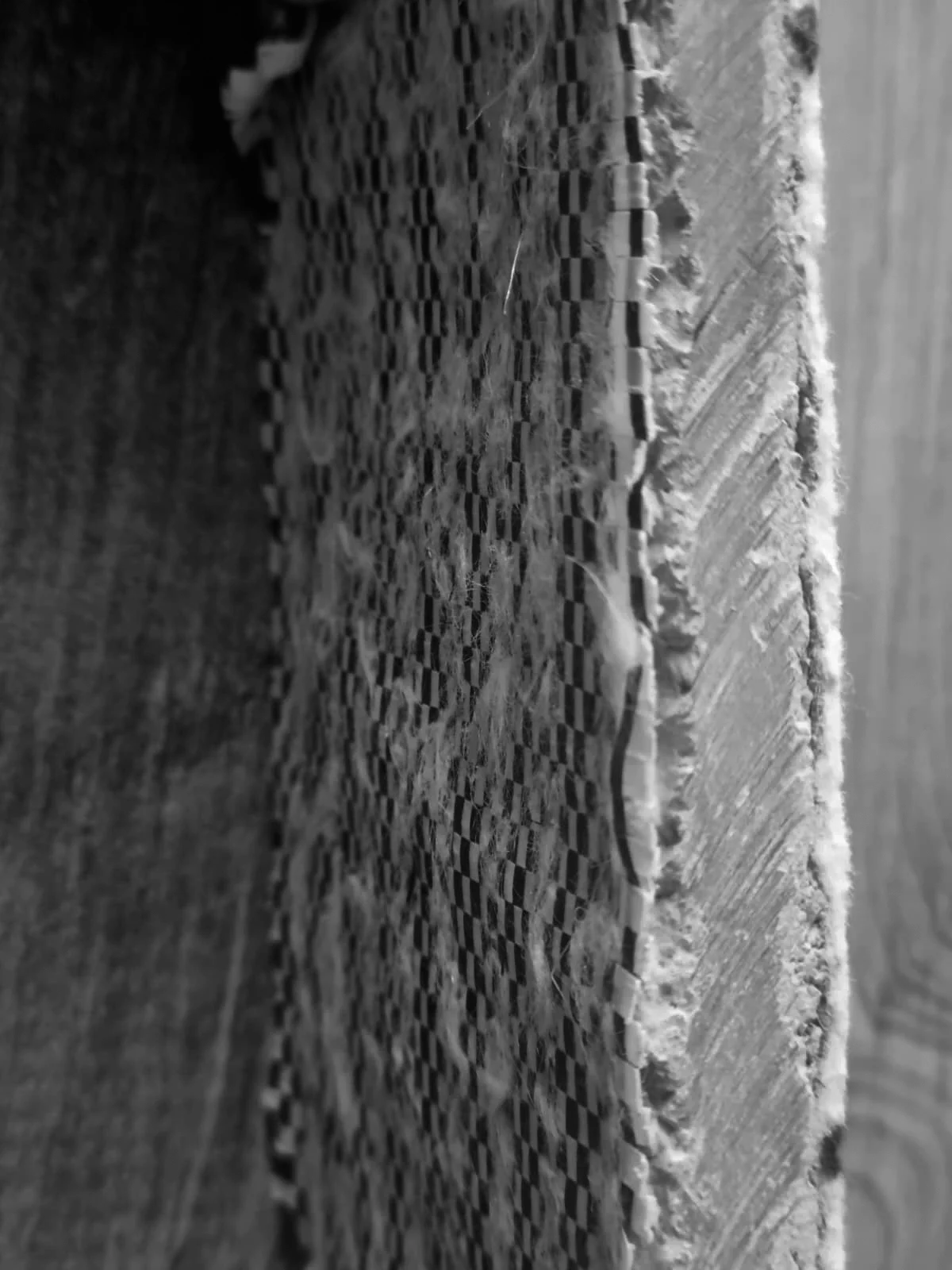
Thanks to its composite structure, Concrete Mat is designed to provide a durable and stable surface under a wide range of site conditions. The key technical advantages of Concrete Mat include:
Concrete Mat and traditional concrete are designed for different construction requirements. Concrete Mat stands out in projects that require rapid installation, minimal equipment, and easy application on sloped or challenging terrain.
| Feature | Traditional Concrete | Concrete Mat |
|---|---|---|
| Installation Time | ❌ Long | ✅ Short |
| Labor Requirement | ❌ High | ✅ Lower |
| Formwork Required | ❌ Usually Required | ✅ Usually Not Required |
| Heavy Equipment | ❌ Often Required | ✅ Minimal |
| Application on Slopes | ❌ More Difficult | ✅ Easier |
| Maintenance | ❌ Varies by Project | ✅ Low |
| Application Speed | ❌ Slower | ✅ Faster |
Concrete Mat is an innovative concrete lining solution that combines rapid installation, minimal equipment requirements, high durability, and excellent adaptability to different surface conditions. Selecting the appropriate product, anchoring system, and installation method should be based on site conditions, slope geometry, water flow characteristics, and the specific technical requirements of the project.